
Near-term · 2027–2032
Probable
Drought Reveals Submerged Infrastructure
Climate Resilience & Energy · Place & Environment · Scanned 2026-08-16
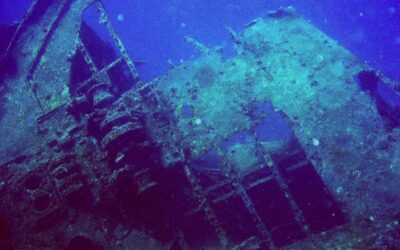
The emergence of archaeological sites and legacy infrastructure during extreme drought events, such as the remains of Nero’s Bridge in the Tiber, signals a shift in how climate volatility interacts with the built environment. These events serve as “forensic droughts,” where receding water levels expose both historical heritage and the vulnerabilities of modern water management systems. For regions like Western New York, which relies heavily on the Great Lakes and Niagara River, such shifts highlight the fragility of aging infrastructure that was designed for stable hydrological conditions. [1] “Drought Resilience” (https://www.worldbank.org/en/topic/water/brief/drought-resilience)
As droughts become more frequent and severe—increasing by 233% in some regions over the last 50 years—the risk to critical infrastructure operations intensifies. In the Buffalo-Niagara region, while water abundance is a perceived constant, localized meteorological droughts and shifting precipitation patterns can lead to unexpected drops in water tables. This may reveal legacy industrial infrastructure or submerged hazards, while simultaneously stressing municipal water utilities that lose trillions of gallons annually to leaky, aging pipes. [2] “Drought Resilience and Water Conservation” (https://www.epa.gov/water-research/drought-resilience-and-water-conservation) [8] “Drought and Infrastructure: A Planning Guide – CISA” (https://www.cisa.gov/sites/default/files/2025-03/drought-and-infrastructure-planning-guide-MAR2025.pdf)
Long-term resilience strategies must now incorporate planning for these hydrological extremes to protect public health and economic activity. The water utility sector is increasingly required to assess risks and reduce vulnerability to water shortages, even in historically water-rich areas. For WNY, this means integrating climate vulnerability assessments into municipal master plans to address the dual threats of aging infrastructure and shifting environmental baselines. [10] “Drought and Water Utility Impacts | Drought.gov” (https://www.drought.gov/sectors/water-utilities)
Main Drivers
Accelerating hydrological volatility
Aging municipal water infrastructure
Climate-driven archaeological exposure
Increasing frequency of extreme heat events
Projected Scenarios
Probable
Severe Hydrological Volatility Exposes Legacy Hazards
Extended drought cycles lower the Niagara River and Lake Erie levels, revealing submerged industrial contaminants and remnants of 19th-century canal infrastructure along the Black Rock Canal. Buffalo Sewer Authority faces emergency retrofitting mandates as intake pipes in the Niagara River reach critical air exposure thresholds, risking supply disruptions for major industrial users.
Buffalo must pivot from an era of water abundance to an expensive, high-stakes infrastructure hardening campaign to secure its primary economic advantage.
Plausible
Wet Weather Cycles Stabilize Water Levels
Shifted climate patterns bring consistent, moderate precipitation across the Great Lakes basin, keeping water levels at or above historic averages for decades. Concerns regarding submerged infrastructure dissipate as the constant flow maintains the integrity of municipal water intakes and shields historical debris from public visibility.
The city loses the immediate political capital required to overhaul archaic underground plumbing, perpetuating a reliance on aging, low-efficiency systems.
Probable
Persistent Infrastructure Decay Remains Ignored Reality
Periodic seasonal water level fluctuations continue, occasionally surfacing minor historical artifacts and debris in the Buffalo River, which are treated as mere curiosities. The municipal status quo persists, with Buffalo Water continuing to perform patchwork maintenance on aging pipes rather than implementing comprehensive climate-resilient system overhauls.
Buffalo slowly trades long-term fiscal stability for short-term maintenance avoidance as pipe leaks and system inefficiencies remain chronic background noise.
Possible
Submerged Colonial Era Fortifications Reshape Tourism
An unprecedented drought uncovers a massive, well-preserved wooden fortification structure near the mouth of the Niagara River, pre-dating the War of 1812. The discovery halts shipping traffic and triggers a massive archaeological surge that forces a radical redesign of the waterfront’s economic strategy to prioritize heritage tourism over industrial freight.
Buffalo finds itself at the center of an international heritage conflict that forces a complete rethink of how the city values its underwater geography.
Sources & Links
Buffalo Signals Laboratory · Climate Resilience & Energy