
Near-term · 2026–2031
Probable
Legacy Industrial Waste Destabilizes Real Estate
Rust Belt Reinvention · Culture & Identity · Scanned 2026-08-12
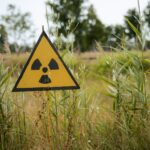
The re-emergence of legacy industrial contamination, specifically radioactive slag used as construction fill, is creating a systemic crisis for property owners and local governance. Recent investigations by the EPA and DEC have identified hundreds of hotspots in residential yards, playgrounds, and commercial sites, stemming from mid-20th-century industrial byproducts. This discovery invalidates decades of land-use assumptions and places significant financial burdens on current owners who face staggering remediation costs ranging from hundreds of thousands to millions of dollars.
Beyond immediate health concerns, this signal indicates a long-term destabilization of the local real estate market. Properties identified with contamination face immediate devaluation, difficulty securing financing for redevelopment, and complex legal hurdles regarding liability waivers. The expansion of testing into new areas suggests that the scope of the industrial slag distribution is broader than previously documented, potentially leading to mass demands for resident relocation and federal Superfund designations as the community grapples with its Manhattan Project-era legacy.
Main Drivers
Legacy industrial waste disposal
Federal environmental oversight expansion
Real estate liability concerns
Projected Scenarios
Plausible
Superfund Expansion Freezes WNY Real Estate Market
Federal regulators expand testing mandates across the South Buffalo and Tonawanda corridors, triggering a wave of property seizures and residential condemnations. Major banks halt mortgage lending for any parcel within a one-mile radius of identified legacy waste sites, effectively freezing transactions in established neighborhoods.
Buffalo experiences a massive urban disinvestment cycle that reverses a decade of housing market gains and forces a difficult conversation about the city’s future habitability.
Possible
Bio-Remediation Breakthrough Stabilizes Legacy Waste Sites
A partnership between the University at Buffalo and local private engineering firms validates a new, low-cost fungal bioremediation process that neutralizes radioactive slag on-site. The DEC approves these localized solutions, allowing property owners to remediate their yards for a fraction of the previous cost, restoring market confidence.
Buffalo effectively mitigates its industrial liability, turning a potential economic catastrophe into a new niche for environmental service exports.
Probable
Incremental Discovery Defines New Property Norms
The discovery of contamination remains a localized, slow-burn issue affecting individual transactions and small-scale infill projects in neighborhoods like Riverside and Black Rock. Homebuyers and developers treat environmental surveys as a standard, albeit expensive, component of closing costs, integrating the risk into the regional price index.
The region continues to struggle with the ‘hidden tax’ of industrial history, creating a persistent drag on small business growth and residential development.
Possible
Niagara River Watershed Declared National Liability Zone
The identification of massive, interconnected underground slag veins leads to a federal declaration that shifts the entire Niagara River corridor into a perpetual, federally managed exclusion zone. This forces a complete relocation of industrial water-dependent sectors and triggers a total restructuring of the region’s municipal governance under federal oversight.
Buffalo is forced into an existential transformation, abandoning its industrial waterfront legacy to survive as a federally-remediated ‘green’ buffer zone.
Sources & Links
Buffalo Signals Laboratory · Rust Belt Reinvention