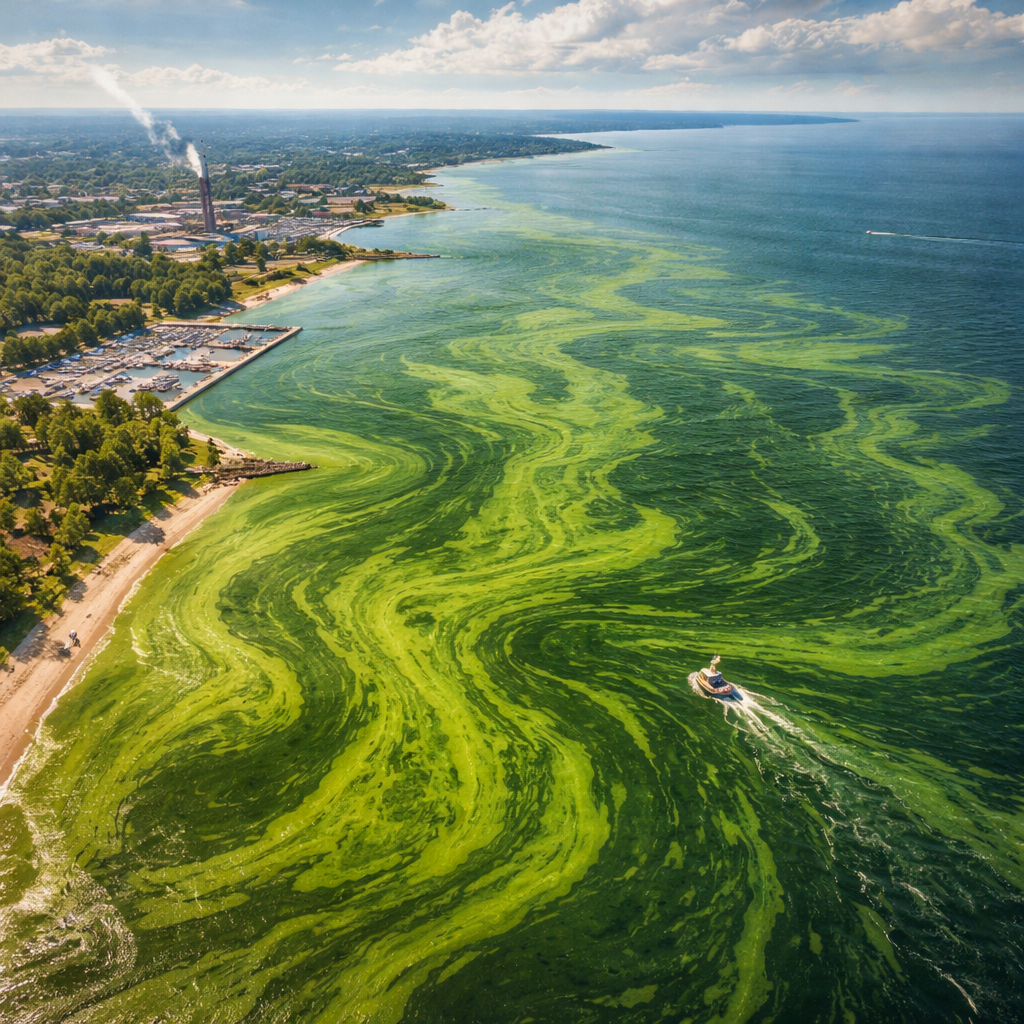
The 2026 binational State of the Great Lakes report, released through the Great Lakes Water Quality Agreement monitoring framework, assessed Lake Erie as “Poor and Unchanging,” the lowest rating assigned to any of the five lakes. Elevated nutrient concentrations, persistent harmful algal blooms, worsening microplastic contamination, and PFAS compounds were cited as the primary drivers. Lake Ontario showed modest improvement by comparison. The U.S. Army Corps of Engineers’ March forecast noted Erie water levels are expected to trend near long-term averages through spring, well below the record highs of 2019–2020.
This signal matters because Buffalo’s most compelling long-term economic narrative depends on Lake Erie being healthy. Lake Erie is the world’s largest supply of fresh surface water in an era of worsening drought. A lake rated “Poor and Unchanging” undercuts that story and creates real risks for waterfront recreation, tourism, drinking water quality, and the freshwater-city brand Buffalo is actively building. If algal blooms intensify and PFAS contamination becomes a public health flashpoint, the freshwater advantage could shift from opportunity to liability faster than current development timelines assume.
The future this signal points toward: Buffalo’s waterfront development strategy increasingly has to treat water quality as a prerequisite for economic investment, not a background condition. The “freshwater city” brand will require a more honest regional narrative about water quality alongside water abundance, and the organizations building on that brand need to invest in remediation, not just marketing.
Details
Last Updated:
3/2026
Main Drivers:
- Agricultural runoff and phosphorus loading from WNY and Ohio tributaries driving persistent algal bloom conditions.
- PFAS contamination from industrial legacy sites and firefighting foam entering Erie’s watershed.
- Federal Great Lakes Restoration Initiative funding under threat of congressional cuts, reducing remediation capacity.
- Climate-driven rainfall extremes increasing nutrient runoff into the lake from surrounding farmland.
- Long-term municipal underinvestment in combined sewer overflow infrastructure feeding into Lake Erie.
Latest News:
- What the State of the Great Lakes Report Tells Us About Our Future — Alliance for the Great Lakes
- Great Lakes Water Levels Decline from Record Highs: What the Forecast Says — Planet Detroit
- Now Open: The Western New York Great Lakes Restoration Grant Program — Buffalo Rising
- Great Lakes Water Funding Faces a Critical Year in Congress — Circle of Blue