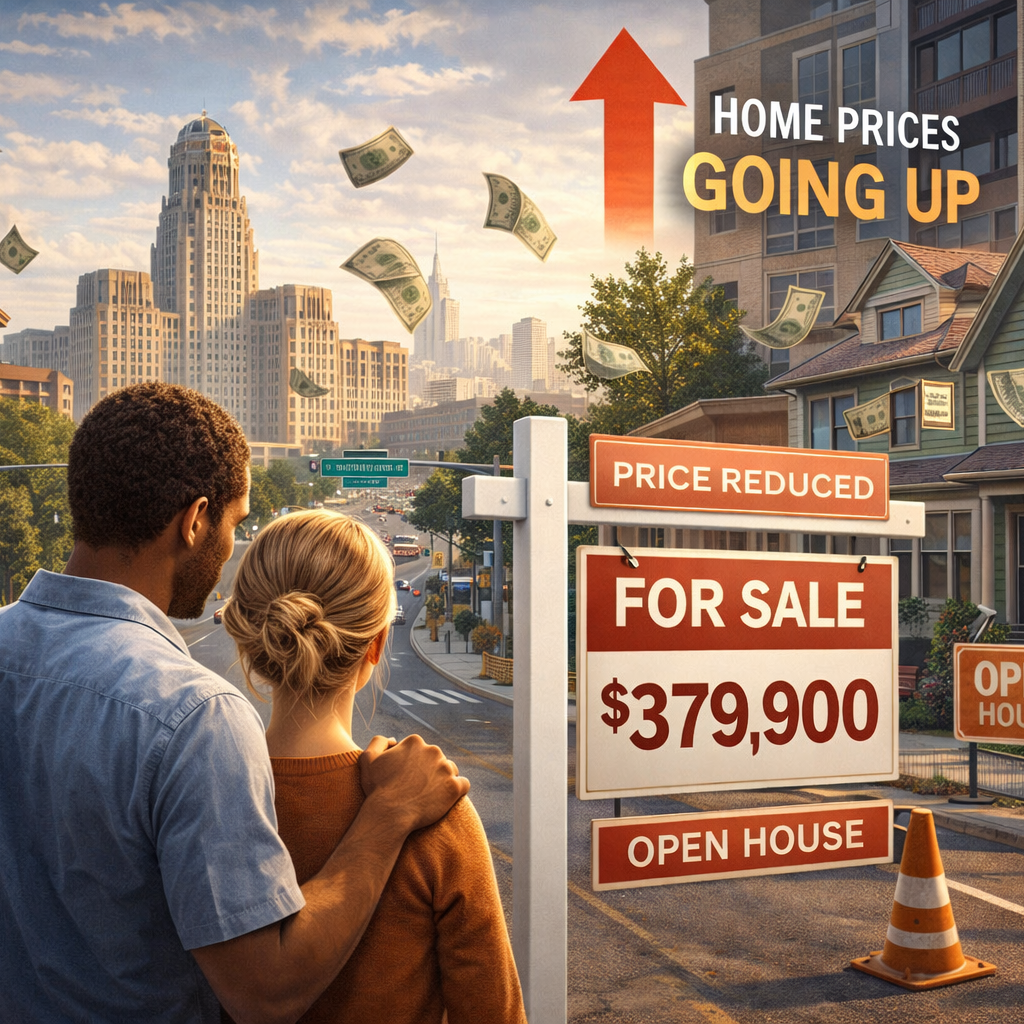
Zillow named Buffalo the #2 hottest housing market in the United States for 2026, behind only Hartford. Redfin data confirms February home prices averaged $205,000 (up 15.5% year-over-year) with only 2.5 months of housing supply in a market that strongly favors sellers. For a city that spent decades fighting population decline and disinvestment, this is an extraordinary reversal. It also introduces a new and serious risk: the erosion of the housing affordability advantage that has been one of Buffalo’s most compelling competitive edges for talent attraction, resident retention, and economic recovery.
The previous Scanlon administration released RFPs for affordable housing development in Hamlin Park and Masten Park, initiatives now carried forward under Mayor Ryan. The Fruit Belt Community Land Trust continues developing properties adjacent to the medical campus. These are meaningful responses, but they are not yet scaled to the magnitude of the market heat. The deeper challenge is that Buffalo’s housing institutions were built for a buyers’ market, not a bidding-war city. The transition requires a fundamentally different strategy: aggressive supply, permanent affordability tools, and political will to zone for density in neighborhoods experiencing the steepest appreciation.
Details
Last Updated:
2/27/26
Main Drivers:
- Persistent housing supply shortage (2.5 months of inventory) combined with rising demand from remote workers and regional in-migration
- Buffalo’s relative affordability attracting outside investor attention at a scale the local market hasn’t previously experienced
- ARPA-funded infill programs producing new supply but at insufficient scale relative to demand
- Remote work migration wave directing knowledge workers toward mid-sized cities with affordable housing and urban amenities
- East Side disinvestment legacy creating a two-track market where western neighborhoods appreciate rapidly while eastern neighborhoods remain underserved
Latest News: