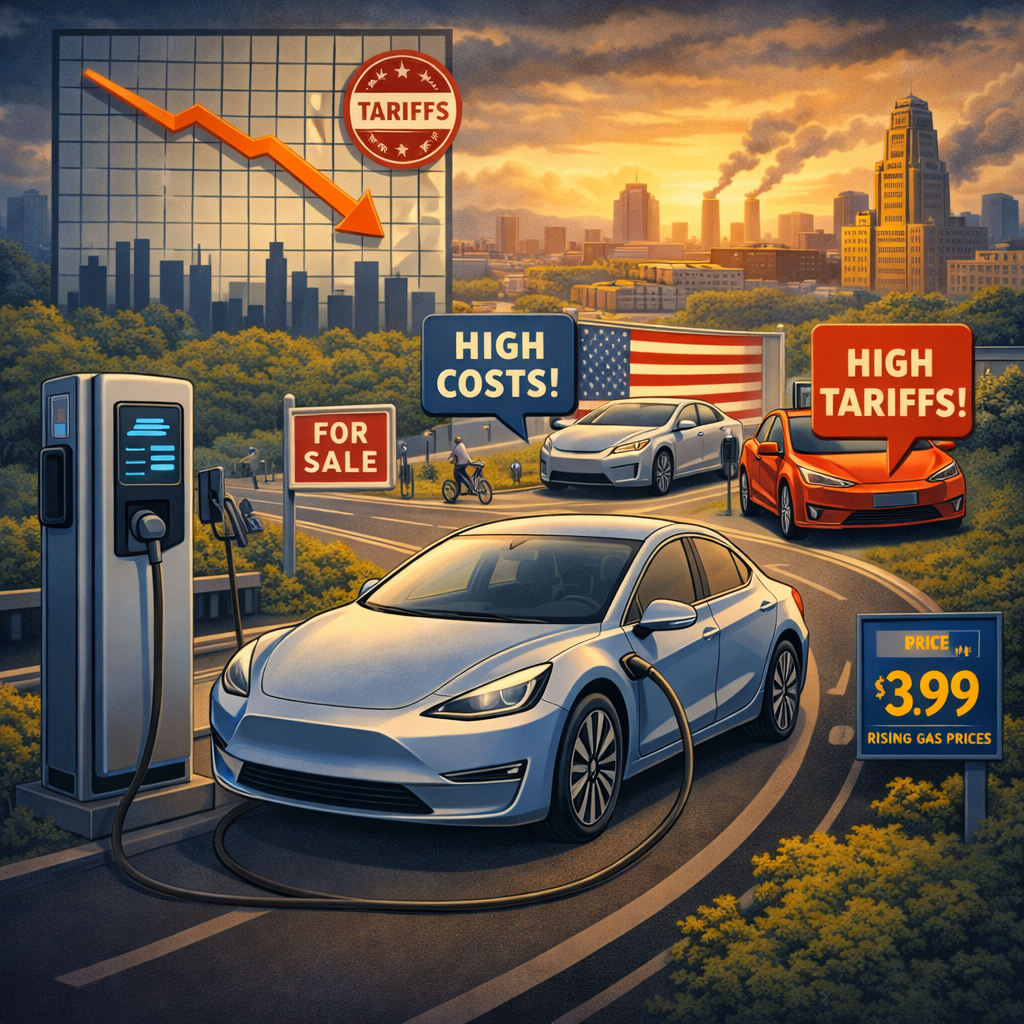
Section 232 tariffs on automotive parts, steel, and aluminum have added an estimated $1,500 to the cost of a U.S.-manufactured vehicle, including electric vehicles. GM’s 2026 forecast includes $3–$4 billion in expected tariff costs across its vehicle portfolio. Federal EV tax credit availability has been narrowed by domestic content requirements under IRA modifications, and the IRA credit changes in the One Big Beautiful Bill further reduce the consumer purchase incentives that have been driving EV adoption in WNY. This arrives at a moment when NFTA was planning to accelerate its electric bus transition and Erie County was developing EV charging infrastructure programs.
The clean transportation transition in WNY was premised on a combination of falling EV costs, federal purchase incentives, and infrastructure grant programs. Each of those assumptions has been disrupted simultaneously. The compounding effect is a slower transition timeline, higher costs for public transit fleet electrification, and a charging infrastructure rollout that may lag the state’s own EV adoption targets.
Details
Last Updated:
4/2026
Main Drivers:
- Section 232 tariffs on automotive parts and materials adding $1,500+ per vehicle to EV manufacturing costs
- IRA EV tax credit modifications narrowing eligibility based on domestic content and battery sourcing requirements
- NFTA’s electric bus transition facing higher procurement costs than budgeted under previous federal program assumptions
- Federal EV charging infrastructure grant programs facing budget pressure in FY2027 appropriations
- Consumer EV adoption slowing as purchase incentives shrink and vehicle prices rise
Latest News: